The Solo Explorer’s Guide to Italy
Originally published July 2025. Updated September 2026 with current entry requirements, costs and travel information.
Intro
Italy had been on my travel list for years, and in May 2015, I finally made it there. I landed in Milan, stayed for one night and then took the train to Rome, where I walked almost everywhere and let the city unfold around me.
Rome wasn’t picture-perfect. The Trevi Fountain was hidden behind scaffolding, and plenty of other landmarks were surrounded by tourists. However, I also managed to reach the Sistine Chapel early enough to experience it in near-silence—something that would be difficult to imagine later in the day. It remains one of my favourite memories from the trip.
From Rome, I continued to Venice by train. I navigated the city with a paper map and repeatedly got lost among its narrow streets and stone bridges. I skipped the gondola because it felt far too expensive for one person, but wandering beside the canals was enough to make Venice feel special.
This guide combines what I experienced while travelling alone through Milan, Rome and Venice with updated advice for planning your own trip. It covers entry requirements, transportation, costs, food and realistic itineraries—along with the things I would do differently if I returned to Italy today.

The Trevi Fountain wasn’t exactly what I expected in May 2015—it was almost completely hidden behind scaffolding.
Why Italy Is Great for Solo Female Travellers
It’s easy to travel between cities: High-speed trains connect destinations such as Rome, Florence, Venice, Milan and Naples.
Many historic centres are walkable: Once you arrive, you can often explore the main sights without renting a car or relying heavily on taxis.
Eating alone doesn’t feel unusual: Pizzerias, cafés, wine bars and casual restaurants offer plenty of comfortable options for solo diners.
There is always something to see: Historic streets, churches, piazzas and famous landmarks make it easy to fill a day without joining a tour.
You can choose your own travel style: Italy offers busy cities, beaches, countryside, hiking, museums, food and nightlife.
Tourist services are widely available: Major destinations have established transportation, accommodation and tour networks.
English is common in popular destinations: You can usually manage in major tourist areas, although learning a few Italian words makes interactions easier.
It’s easy to combine independence with company: Walking tours, cooking classes, hostels and day trips provide opportunities to meet people when you feel social.
Italy still requires the normal solo-travel precautions, particularly around crowded attractions and transportation hubs, but I found it easy to explore independently.

Taking a quiet break beside one of Venice’s canals.
Entry Requirements for Italy
Current as of September 2026 for travellers with a regular Canadian passport.
Passport validity: Your passport must be valid for at least three months beyond the date you plan to leave the Schengen Area. It must also have been issued within the previous ten years.
Visa-free travel: Canadians can currently visit Italy and the rest of the Schengen Area for up to 90 days within any 180-day period without a visa.
The 90-day limit is shared: Time spent in other Schengen countries counts toward the same 90-day allowance. Travelling from Italy to another Schengen country does not restart it.
Entry/Exit System: The EU’s Entry/Exit System, known as EES, is now operating. Border officials may collect your facial image and fingerprints when you enter the Schengen Area. You do not need to submit an EES application before travelling.
ETIAS: ETIAS is expected to begin in the final quarter of 2026, but an exact launch date has not been announced. It is not currently operating, and applications are not being accepted.
Supporting documents: Border officials may ask for proof of accommodation, an onward or return ticket and enough money to support your trip.
Important: Only use the official European Union ETIAS website when applications eventually open. Websites claiming that you can apply now are not official.
Declaration of presence: Commercial accommodations generally register your stay with the authorities. If you enter Italy from another Schengen country and stay in private accommodation, you may be responsible for filing a declaration of presence with the local police within eight days. Confirm what applies to your accommodation.
Entry requirements can change. Before travelling, check the Government of Canada’s Italy travel advice and the rules that apply to your nationality.
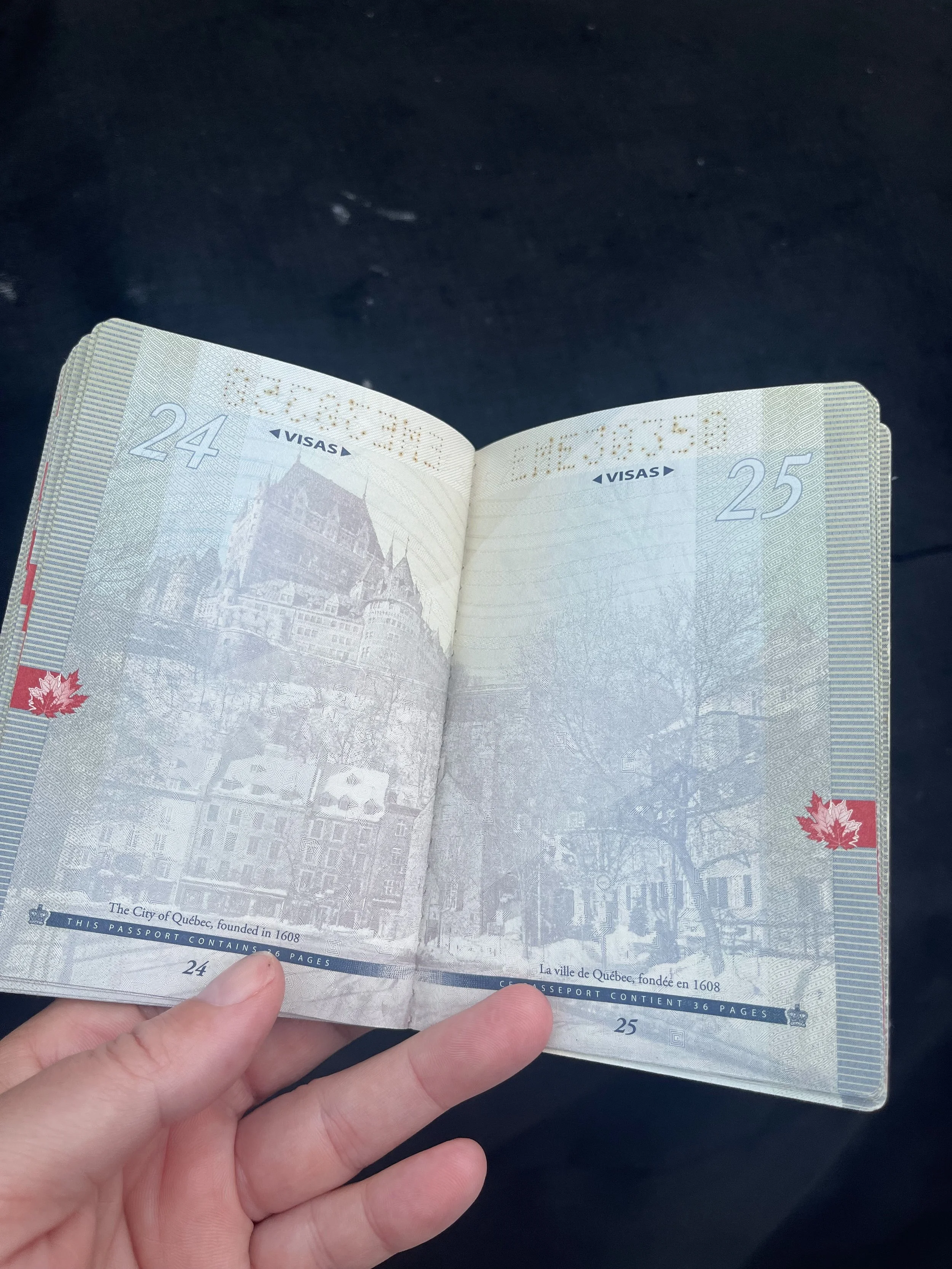
Every stamp tells a story — this one starts in Italy.
Best Time to Visit Italy
Italy can be visited throughout the year, but the best season depends on whether you’re planning a city trip, beach holiday, hiking trip or winter escape.
Spring (April–June): Usually a good time for sightseeing, with milder temperatures and longer days. Popular cities can already be busy by May, particularly around major attractions.
Summer (July–August): Expect high temperatures, large crowds and expensive accommodation in popular destinations. Coastal areas are at their busiest, while walking around cities such as Rome and Florence can become exhausting in the afternoon heat.
Autumn (September–October): Temperatures are generally more comfortable for exploring cities, and the grape harvest makes it a popular season for food and wine trips. Crowds don’t disappear immediately after August, so book major attractions in advance.
Winter (November–March): Cities are generally quieter and accommodation may cost less outside Christmas, New Year and Carnival. Some attractions have shorter hours, while seasonal hotels and restaurants in coastal areas may close.
Venice in autumn and winter: Venice can experience acqua alta, or high-water flooding, particularly during these seasons. The MOSE barrier system now prevents many major flooding events, but local conditions can still affect parts of the city.
My experience: I visited in May and had comfortable weather for walking around Milan, Rome and Venice. It wasn’t crowd-free, and the Trevi Fountain was hidden behind scaffolding, but I avoided the intense heat that would have made all that walking much harder.
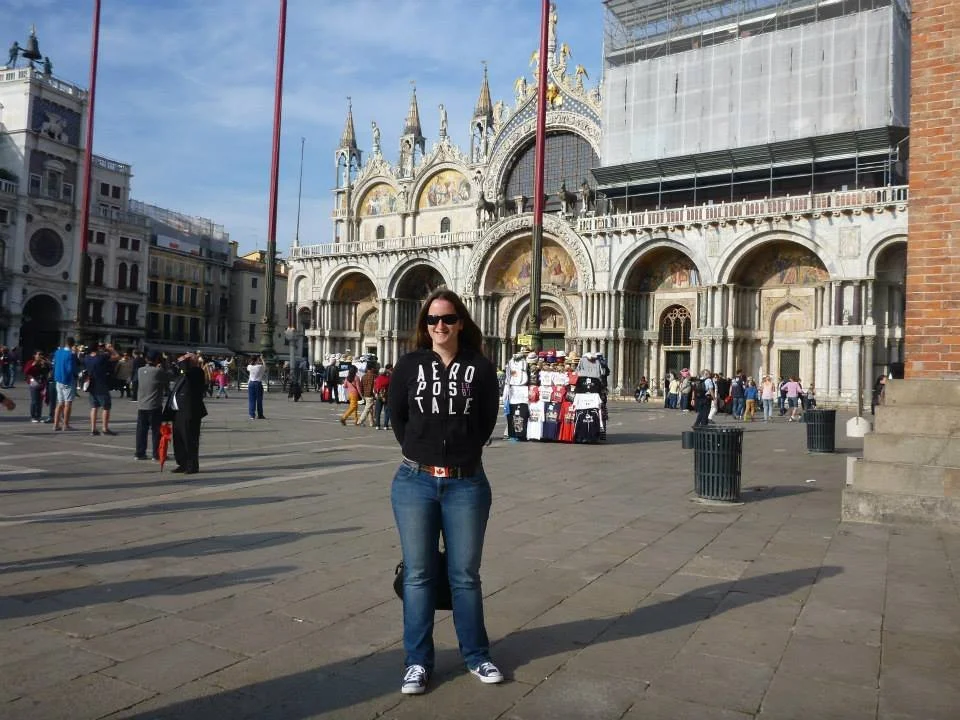
A cool May day in Venice was much better for walking than the heat of midsummer.
Money and Currency: How to Pay in Italy
Currency: Italy uses the euro (€).
Approximate exchange rate: As of September 2026, €1 is approximately $1.16 USD or $1.61 CAD. Exchange rates change, so check the current rate before travelling.
Credit and debit cards: Cards are widely accepted at hotels, restaurants, shops and major attractions. Visa and Mastercard are generally the easiest to use.
Contactless payments: Tap payments are common, but keep your physical card and PIN available in case contactless payment fails.
Cash: Carry a small amount for public washrooms, markets, small purchases and businesses with temporary card-machine problems.
ATMs: ATMs are commonly labelled bancomat. Use one attached to a recognised bank when possible and review all fees before confirming the withdrawal.
Currency conversion: If an ATM or card terminal asks whether you want to pay in Canadian dollars or euros, choose euros. Allowing the machine to perform the conversion usually results in a worse exchange rate.
City taxes: Many Italian cities charge an accommodation tax that may not be included in the advertised room price. The amount varies by city, accommodation type and length of stay.
My experience: I used my Canadian credit card for most purchases and withdrew a small amount of cash when I needed it. Walking everywhere and eating simple meals such as pizza al taglio made it easier to control my spending.

Italy uses the euro, but I still carried a mixture of cash and cards.
Where to Stay in Italy
I stayed in budget hostels near train stations or within walking distance of the main sights. This helped me avoid spending money on taxis, but the neighbourhood immediately around a station isn’t always the most attractive—or the most comfortable place to walk alone late at night.
Rome: Monti is convenient for the Colosseum and Roman Forum, while Trastevere is popular for restaurants and evening atmosphere. Staying near Termini makes train travel easier, but read recent reviews and check the exact street before booking.
Venice: Staying on the main island allows you to experience Venice early in the morning and after many day visitors leave. Accommodation near Santa Lucia station is easier with luggage, while staying farther into the city may mean carrying your bag over several bridges.
Mestre: Staying on the mainland is often cheaper than central Venice, but you’ll need to take a train or bus into the historic centre each day.
Milan: The area around Milano Centrale is convenient for a short stay or early train. If sightseeing is your priority, staying closer to the Duomo places you nearer the major attractions but normally costs more.
Florence: The historic centre is compact and walkable. Accommodation near Santa Maria Novella station is practical if you’re arriving by train or using Florence as a base for day trips.
Before booking, check whether the property has air conditioning, an elevator and 24-hour reception. Older Italian buildings may have steep stairs, small elevators or no elevator at all.
Venice Access Fee: Venice charges some day visitors an Access Fee on selected high-traffic dates. The 2026 programme ended on July 26, and no fee is currently required. Overnight guests staying within the Municipality of Venice were exempt because they paid an accommodation tax, although an exemption QR code was required on fee days. Check the official Venice Access Fee website before your trip because new dates and rules may be introduced.
My experience: I chose hostels based largely on price and location. In Rome, I stayed close enough to walk to the Colosseum, and in Venice I quickly learned that even a short distance on a map can involve carrying a backpack over bridge after bridge.

Looking across the rooftops of Rome from above.
What to Eat in Italy
Italian food is highly regional, so the dishes you find in Rome may be completely different from those served in Venice or Milan. Try the local speciality instead of ordering the same meal in every city.
Pizza al taglio: Roman pizza baked in large trays, cut into pieces and usually priced by weight. It’s quick, inexpensive and convenient when you’re sightseeing alone.
Carbonara: A Roman pasta traditionally made with egg, pecorino romano, guanciale and black pepper—without cream.
Cacio e pepe: Pasta made with pecorino romano and black pepper. It sounds simple, but getting the sauce right is harder than it looks.
Amatriciana: Pasta served with tomato, pecorino romano and guanciale.
Cicchetti: Small Venetian snacks commonly served in bàcari, or local wine bars. They’re useful when you want to try several things without ordering a large meal.
Risotto alla Milanese: Creamy saffron risotto and one of Milan’s best-known dishes.
Gelato: Italy’s famous frozen dessert comes in an enormous range of flavours. Look for shops making gelato in smaller batches rather than choosing solely by the biggest, brightest display.
Fresh bread and pastries: Regional options include focaccia, cornetti and pastries filled with cream, jam or chocolate.
Tiramisù: Coffee-soaked biscuits layered with mascarpone and cocoa. It is strongly associated with the Veneto region, although its exact origin is debated.
Regional wine: House wine can be an affordable way to try something local without ordering an expensive bottle.
Coffee culture: Italians generally drink cappuccino and other milk-heavy coffees in the morning, while espresso is common throughout the day. You can still order what you want whenever you want. Standing at the bar is often cheaper than sitting at a table.
My experience: I don’t drink coffee, so I happily replaced the Italian coffee experience with local wine. I also relied on pizza by the slice, gelato and inexpensive takeaway meals when I wanted to keep moving instead of sitting down for a long lunch.

Chicken, chips and a cheap beer—definitely not my most traditional Italian meal.
Suggested Italy Itineraries: 5 Days to 2 Weeks
Italy is easy to explore by train, but every transfer still takes time. A shorter trip will be much more enjoyable if you choose two cities rather than racing between four.
Five Days: Rome and Venice
Rome – 3 days: Spend one day exploring the Colosseum, Roman Forum and surrounding historic areas. Use another for the Pantheon, Trevi Fountain, Spanish Steps and Piazza Navona. Give the Vatican Museums, Sistine Chapel and St. Peter’s Basilica their own day.
Venice – 2 days: Explore St. Mark’s Square, the Rialto Bridge and the quieter streets away from the main tourist route. Use the second day for more of central Venice or a vaporetto trip to Murano and Burano.
This route works best if you fly into Rome and leave from Venice—or complete it in reverse—rather than returning to your arrival city.
Ten Days: Rome, Florence, Venice and Milan
Rome – 3 days: Ancient sites, historic neighbourhoods and Vatican City.
Florence – 2 days: Visit the Duomo, Ponte Vecchio and one major art museum. Reserve tickets in advance if you want to see Michelangelo’s David or the Uffizi Gallery.
Venice – 2 days: Explore the main sights, get lost in the side streets and use the vaporetto to see the city from the water.
Milan – 2 days: Visit the Duomo, walk through the Galleria Vittorio Emanuele II and explore the city beyond the train station.
One flexible day: Use this for travel, a slower day or an extra night in the city that interests you most.
This itinerary follows a logical train route through central and northern Italy.
Two Weeks: Rome, Naples, Florence, Venice and Milan
Rome – 4 days: Allow time for the ancient city, Vatican City and neighbourhoods beyond the major attractions.
Naples – 2 days: Explore the historic centre, eat authentic Neapolitan pizza and consider a visit to Pompeii.
Florence – 3 days: See the major sights and use one day for Siena, Pisa or the Tuscan countryside.
Venice – 3 days: Explore central Venice without rushing and consider visiting Murano, Burano or both.
Milan – 2 days: Finish with the Duomo, shopping areas, museums and easier access to a major international airport.
High-speed trains connect all five cities, although booking early usually gives you more choice and lower fares.
My Route
I travelled from Milan to Rome and then continued to Venice. It worked for the limited time I had, but it was a fast trip. If I returned, I would stay longer in Rome and leave more unplanned time for Venice instead of trying to fit another city into the same number of days.
My advice: Don’t add Florence, Naples or another famous destination simply because it looks close on a map. Two properly explored cities will give you a better trip than four train stations and a collection of rushed photographs.

One of Venice’s busy shopping streets, packed with visitors and souvenir stalls.
Getting Around Italy
High-speed trains: Trenitalia and Italo connect major cities including Rome, Florence, Venice, Milan and Naples. Fares are often lower when booked in advance, and your ticket is valid only for the specific train and seat shown.
Regional trains: Regional services are useful for shorter trips and smaller destinations. Digital Trenitalia regional tickets are automatically validated at the scheduled departure time. Paper regional tickets may still need to be validated before boarding, so follow the instructions printed on your ticket.
Walking: Historic centres such as Rome, Florence and Venice are best explored on foot. Wear supportive shoes because cobblestones, stairs and long sightseeing days can be hard on your feet.
Buses, trams and metros: Public transportation is useful in larger cities. Ticket systems vary, but you must normally validate a paper ticket when beginning your journey. Don’t assume that simply purchasing it is enough.
Vaporettos: Venice’s public water buses connect different parts of the city and islands such as Murano and Burano. A day or multi-day pass may cost less than buying several individual journeys.
Taxis: Official Italian taxis are normally white, have a taxi sign on the roof and use a meter. Use an official taxi rank or booking service rather than accepting rides from drivers approaching tourists at airports or stations.
Rental cars: A car is useful for exploring the countryside, but it is unnecessary in major cities. Historic centres often contain restricted-traffic zones known as ZTLs, and accidentally entering one can result in a fine.
Driving documents: Canadians need a valid Canadian licence accompanied by an International Driving Permit or certified Italian translation. Confirm that your rental and travel insurance provide the coverage you need.
Domestic flights: Flying may save time when travelling between northern Italy and Sicily or Sardinia. Include airport transportation and baggage fees when comparing the cost with trains.
My experience: I walked almost everywhere in Rome and Venice and used trains between cities. Booking early helped me find affordable fares, and travelling by train was much easier than trying to drive through unfamiliar Italian cities.

Travelling between Italian cities by train was one of the easiest parts of my trip.
Budget Breakdown Per Day (USD)
These are approximate per-person costs for 2026. International flights, travel insurance, city taxes and long-distance journeys between regions are not included.
Accommodation
Low: $35–65 — Hostel dorms and basic guesthouses
Mid: $90–150 — Private rooms, smaller hotels and comfortable guesthouses
High: $220+ — Luxury hotels, central apartments and high-end accommodation
Food and Drink
Low: $20–35 — Pizza by the slice, bakeries, takeaway meals and groceries
Mid: $35–60 — A mixture of casual restaurants, takeaway meals, gelato and wine
High: $90+ — Upscale restaurants, cocktails, wine and multi-course meals
Local Transportation
Low: $5–12 — Walking and occasional public transportation
Mid: $10–25 — Regular buses, metros, vaporettos and occasional taxis
High: $50+ — Frequent taxis, private transfers and chauffeur services
Attractions and Activities
Low: $10–20 — Free landmarks, churches and occasional museum admission
Mid: $20–45 — Major attractions, museums and combination tickets
High: $75+ — Guided tours, cooking classes and premium experiences
Souvenirs and Extras
Low: $5–10 — Postcards, magnets and small food items
Mid: $10–30 — Local wine, artisan products and speciality foods
High: $50+ — Leather goods, Murano glass, designer products and artwork
Estimated Total Per Day
Low: $75–142
Mid: $165–310
High: $485+
You can mix the levels depending on what matters most to you. You might stay in a hostel, eat inexpensive takeaway meals and spend more on a Vatican tour—or choose a private room and focus on free attractions.
My experience: Walking was the easiest way for me to save money, and it was also how I preferred to explore Rome and Venice. I skipped the gondola because the price felt difficult to justify as a solo traveller, but I was willing to spend more on trains between cities.

Gelato was one budget expense I never regretted.
Souvenirs to Buy in Italy
Italy has an enormous range of regional products, so look for something connected to the place you visited rather than buying the same mass-produced souvenir found in every city.
Murano glass: Jewellery, ornaments and small decorative pieces are popular Venice souvenirs. Genuine Murano glass should come with information identifying where it was made.
Venetian masks: Choose between inexpensive decorative masks and handmade pieces created by Venetian artisans.
Leather goods: Florence is known for leather bags, belts, wallets and jackets. Compare the quality carefully because not everything sold near tourist attractions is locally made.
Regional pasta: Different areas have their own shapes and specialities, including orecchiette from Puglia and colourful packaged pasta sold throughout the country.
Olive oil and balsamic vinegar: Look for sealed, well-labelled bottles from recognised producing regions. Pack liquids carefully and check airline and Canadian customs restrictions.
Italian wine or limoncello: Wine from Tuscany, Veneto, Piedmont or Sicily can make a memorable souvenir, while limoncello is associated with southern Italy.
Religious items: Rosaries, medals and other keepsakes are widely available around Vatican City.
Art prints and postcards: Museum shops and local artists sell prints that are easier to pack than heavier decorative items.
Chocolate and sweets: Baci chocolates, torrone and packaged regional biscuits make practical gifts.
My advice: Avoid counterfeit designer products and sellers who pressure you into making a quick purchase. Bargaining is not expected in regular shops or artisan studios, and a high price does not automatically prove that something was made locally.

Browsing the souvenir stalls in Venice.
JD’s Personal Tips for Italy
Book major attractions in advance: The Colosseum, Vatican Museums, Uffizi Gallery and Accademia can sell out. Purchase tickets from the attraction’s official website rather than an unofficial “skip-the-line” reseller.
Choose an early Vatican Museums time: I arrived early enough to experience the Sistine Chapel in near-silence. You may not get it completely to yourself, but an early reservation gives you a better chance of avoiding the largest crowds.
Know about the Trevi Fountain fee: Since February 2026, tourists must pay €2 to enter the area closest to the fountain basin between 9 a.m. and 10 p.m. You can still see the fountain from farther back without paying.
Wear supportive shoes: Italy’s historic centres are walkable, but cobblestones and long days will take a toll on your feet.
Carry a refillable water bottle: Rome has public drinking fountains known as nasoni. The water is free and useful during long walking days.
Keep a few coins available: You may need them for public washrooms, small purchases or accommodation taxes.
Download offline maps: I navigated Venice with a paper map and still got lost repeatedly. Today, I’d download the city before arriving—but I would still expect to take a few wrong turns.
Expect renovations: Famous landmarks may be partially closed or hidden behind scaffolding. The Trevi Fountain was under restoration when I visited, and it became part of my memory of the trip.
Leave room in your schedule: A delayed train, long museum visit or wrong turn in Venice can easily change the day. Don’t book every hour.
Don’t feel awkward dining alone: I had no problem eating by myself. A glass of wine and a seat facing the street provided plenty of entertainment.
My advice: Italy rewards walking and getting slightly lost. Some of my favourite moments happened between the famous attractions rather than directly in front of them.

The view across Rome after climbing to the top of St. Peter’s Basilica.
Solo Travel and Cultural Notes
Solo Travel and Safety
Watch your belongings in crowded places: Pickpocketing and bag snatching frequently occur around major attractions, public transportation, stations and airports.
Keep your bag in front of you: Use a zipped crossbody bag and avoid hanging it from the back of a chair at a restaurant.
Be alert to distraction tactics: One person may spill something, ask for help or start a conversation while someone else reaches for your belongings.
Protect your food and drinks: Don’t leave them unattended or accept open drinks, food or cigarettes from strangers.
Use official transportation: Take licensed white taxis from a marked rank or arrange one through a recognised booking service.
Check for strikes: Transportation strikes and demonstrations can occur with little notice. Check your train or flight status before leaving your accommodation.
Save emergency numbers: Call 112 for emergencies. Italy’s gender-based violence and stalking helpline is available at 1522.
Review current travel advice: The Government of Canada currently advises travellers to exercise a high degree of caution in Italy due to the threat of terrorism. Check the current Italy travel advisory before your trip.
Cultural Etiquette
Dress respectfully in churches: Cover your shoulders and knees when entering major churches and religious sites. Some locations may refuse entry if your clothing doesn’t meet their rules.
Learn a few Italian words: A greeting, thank you and polite attempt at Italian can make everyday interactions friendlier.
Expect a coperto: Many restaurants add a per-person cover charge to the bill. It should be listed on the menu and is separate from a tip.
Tipping is optional: A small amount for good service is appreciated, but the large percentage-based tips expected in Canada and the United States are not required.
Meal times may be later: Some restaurants close between lunch and dinner and may not begin evening service until 7:00 or 7:30 p.m.
Check weekly closing days: Smaller shops, restaurants and attractions may close on Sundays, Mondays or during part of the afternoon. The schedule varies, so check each place rather than assuming everything will be open.
Order what you enjoy: Italians may usually drink cappuccino in the morning, but you’re still allowed to order one later. Cultural habits aren’t laws.
Respect public spaces: Don’t climb on fountains, sit on protected monuments or eat in areas where signs prohibit it.
Ask before photographing people: This is particularly important during religious services, ceremonies and in smaller communities.
My experience: I never felt uncomfortable eating alone. I could order a meal, have a glass of wine and watch the city around me without needing to pretend I was waiting for someone. I received the occasional flirtatious comment, but most people left me to enjoy my meal.

St. Peter’s Square filling with people before the Pope’s Sunday address.
Speak a Little Italian
Italian pronunciation is generally more predictable than English, but the examples below are only approximations. A few polite words will help even in places where English is widely spoken.
Sì — Yes — see
No — No — noh
Buongiorno — Good morning or good day — bwon-JOR-noh
Buonasera — Good evening — bwoh-nah-SEH-rah
Ciao — Hello or goodbye informally — chow
Grazie — Thank you — GRAHT-see-eh
Prego — You’re welcome — PREH-goh
Per favore — Please — pehr fah-VOH-reh
Mi scusi — Excuse me or sorry, formally — mee SKOO-zee
Scusa — Excuse me or sorry, informally — SKOO-zah
Quanto costa? — How much does it cost? — KWAHN-toh KOH-stah
Dov’è il bagno? — Where is the washroom? — doh-VEH eel BAH-nyoh
Il conto, per favore — The bill, please — eel KON-toh pehr fah-VOH-reh
Un bicchiere di vino — A glass of wine — oon bee-KYEH-reh dee VEE-noh
Non parlo italiano — I don’t speak Italian — non PAR-loh ee-tah-LYAH-noh
Parla inglese? — Do you speak English? — PAR-lah een-GLAY-zeh
Aiuto! — Help! — ah-YOO-toh
My experience: Grazie and scusa were the words I used most often. Even when I didn’t know how to say the rest of the sentence, beginning politely and making an effort usually helped.

Italian and English signs at the entrance to the Colosseum made it easier to navigate.
